






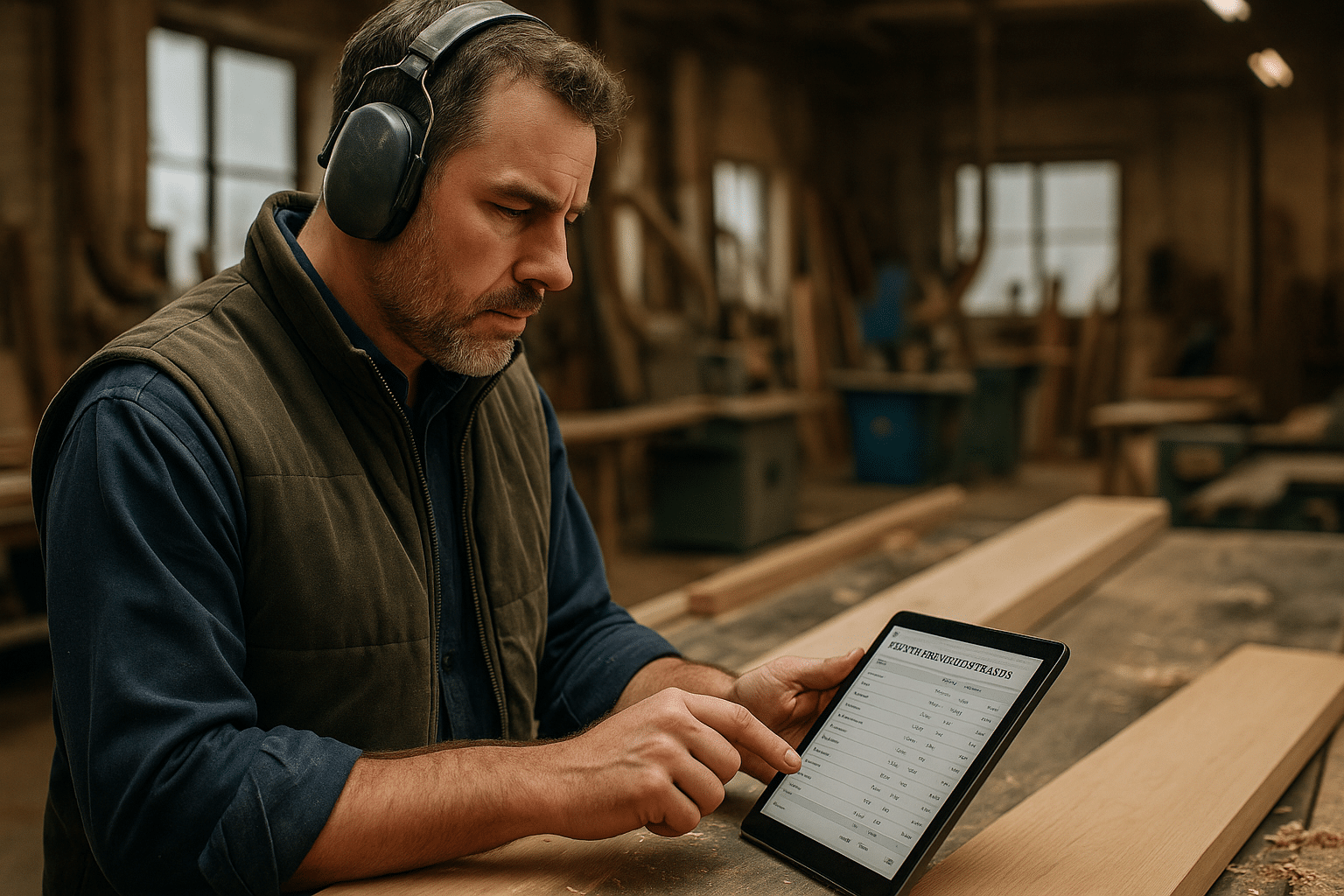

Joinery Workshops Track Production Hours Precisely
joinery workshops across the UK are increasingly adopting sophisticated methods to monitor and log production hours meticulously. These practices are essential for ensuring that projects remain within budget and deadlines are met. By implementing a joinery production tracker UK, workshops can efficiently record the time spent on each task, from initial design to final assembly. Accurate tracking allows for better resource allocation, evaluating workers’ performance, and identifying any bottlenecks in the workflow. This level of oversight enables management to make informed decisions on how to optimize processes for greater efficiency. As the demand for custom joinery solutions grows, the need for reliable production tracking becomes even more critical, ensuring that businesses can maintain high standards while delivering projects on time.
New in this topic: Carpentry Teams Simplify Subcontractor Coordination.
Importance of precise hour tracking
Precise hour tracking is vital for joinery workshops because it directly influences profitability and project management. When workshops can accurately record the time spent on each phase of the production process, they gain valuable insights into their operations. This precision helps in estimating project costs more effectively, ensuring that quotes provided to clients reflect the true labor investment required. Additionally, by understanding how time is allocated across different tasks, workshops can identify inefficiencies and areas for improvement. This ultimately leads to enhanced productivity as resources are optimized, and workflow becomes smoother. Moreover, precise hour tracking provides a foundation for performance analytics, enabling management to assess worker efficiency and implement targeted training or support where needed. Workshops using a joinery production tracker UK benefit by not only minimizing costs but also improving client satisfaction through timely project delivery.

Tools and technologies used
In today’s technologically driven landscape, joinery workshops are leveraging various tools and technologies to streamline their production tracking processes. Sophisticated software solutions designed for the woodworking industry, such as dedicated joinery production tracker UK systems, are at the forefront of this evolution. These platforms allow workshop managers to digitize their time tracking, providing real-time insights into project status and labor allocation. Features often include mobile accessibility, enabling workers to log hours directly from the shop floor, thus minimizing errors associated with manual recording.
Furthermore, many of these systems integrate with existing project management tools, ensuring seamless communication between teams and enhancing the overall workflow. Advanced analytics capabilities enable workshops to analyze historical data, helping them forecast future project timelines and resource requirements more effectively. Automation is another key aspect, as repetitive tasks such as reporting or data entry can be streamlined, freeing up staff to focus on more critical elements of production.
Cloud-based solutions have also gained traction, allowing for remote access to information and facilitating collaboration across multiple locations. This means that team members can access up-to-date progress reports and adjust workflows as necessary, regardless of their physical location. Incorporating barcode scanning technologies allows for swift inventory tracking, ensuring that materials are accounted for and that production schedules remain on track. The integration of these various tools and technologies not only boosts efficiency but also enhances accuracy in time tracking, which is essential for successful project management in joinery workshops.

Benefits of optimized production hours
Optimizing production hours in joinery workshops offers a multitude of benefits that can significantly enhance operational efficiency and competitiveness. By effectively managing and reducing production hours, workshops can lower overhead costs and boost profitability. A joinery production tracker UK plays a crucial role in this optimization by providing accurate data on time spent across all tasks. This data allows for more precise project estimations, enabling workshops to create realistic budgets and quotes that reflect actual labor requirements.
Additionally, the reduction of production hours can lead to improved worker morale. When employees see that their time is being utilized efficiently, they are likely to feel more valued and engaged. Increased engagement can translate into higher productivity levels and a commitment to the quality of work, driving overall workshop performance. Workshops that successfully optimize their production hours often report better retention rates of skilled labor, which is essential in a trade where expertise is critical.
Another significant benefit is the ability to take on more projects without additional strain on resources. Optimized production hours mean that workshops can maximize their output while still maintaining high standards of craftsmanship. This capacity allows businesses to be more flexible in responding to client demands and undertaking larger projects or multiple jobs simultaneously, which can lead to increased revenue opportunities.
Case studies and success stories
Case studies from various joinery workshops illustrate the tangible benefits that come from implementing precise production tracking. One notable example is a mid-sized joinery workshop in the West Midlands that adopted a joinery production tracker UK system after struggling with project delays and budget overruns. By integrating this technology, the workshop recorded a 30% reduction in project turnaround times within the first six months. This improvement allowed them to complete jobs quicker, increasing their capacity to take on additional projects, resulting in a significant boost in revenue.
Another success story involves a family-run joinery business that had been in operation for over three decades. Faced with increasing competition and declining profit margins, they decided to implement an advanced production tracking system. The system provided real-time data on labor hours, material usage, and workflow efficiency. Over the course of a year, the workshop reported a 20% decrease in labor costs, as the data revealed bottlenecks that could be addressed through better planning and worker allocation. This change not only improved their profit margins but also enhanced the overall quality of their craftsmanship, leading to higher client satisfaction rates and repeat business.
A larger operation based in Scotland also saw remarkable results after introducing a joinery production tracker UK to streamline their processes. They faced challenges with tracking hours across multiple projects and locations, which often led to inaccuracies in billing and resource management. By adopting a cloud-based solution that offered mobile accessibility for their team, they achieved better synchronization between the production floor and management. As a result, they were able to elevate their client engagement through timely updates and more accurate estimates, fostering stronger relationships that translated into repeat contracts and referrals.


