








Small Trades Teams Use AI Suggestions for Job Planning
small trades teams often face a unique set of challenges that can hinder their efficiency and effectiveness in job planning and execution. These teams, which typically consist of a small number of skilled professionals, must juggle various tasks, including scheduling jobs, managing resources, and ensuring timely completion of projects. Limited manpower can lead to overwhelming workloads, making it difficult for team members to coordinate and prioritize tasks effectively. Additionally, small trades teams often operate within tight budgets, which restricts their ability to invest in advanced tools or technologies that could streamline their processes.
New in this topic: Why UK Buildings Perform Better With Cloud Coordination.
Communication is another significant challenge for these teams. Miscommunication can result in costly delays and mistakes, especially when team members are on different job sites. Furthermore, the lack of a centralized system for tracking job progress and managing resources can exacerbate these issues, leaving teams scrambling to adapt to changing situations. As the demands of clients continue to evolve, small trades teams must find innovative solutions to optimize their workflows.
Adopting an AI trades planning app in the UK could be a pivotal step for these teams. Such applications offer features that can automate scheduling and optimize resource allocation, potentially transforming how small trades teams manage their projects. By leveraging these advanced tools, teams can improve their planning processes, enhance communication, and ultimately deliver better results for their clients.
The role of AI in job planning

Artificial Intelligence (AI) has emerged as a transformative force in job planning, particularly for small trades teams facing various operational challenges. By utilizing advanced algorithms, AI can analyze data from past projects, current resources, and market trends, enabling teams to make informed decisions quickly. This technology offers a level of insight that was previously unattainable, allowing trades professionals to anticipate potential issues before they arise. The integration of an AI trades planning app in the UK can streamline this process significantly, providing teams with tailored suggestions that cater to their specific needs and project requirements.
Moreover, AI applications can automate repetitive tasks such as scheduling, resource allocation, and even material purchasing. This not only saves time but also allows team members to focus on their core competencies, ultimately improving productivity and job satisfaction. As AI systems learn from ongoing data inputs, they can refine their recommendations, making them increasingly relevant and actionable for small teams navigating the often volatile demands of the construction landscape.
With its ability to process large amounts of information in real-time, AI can also enhance communication within small trades teams. It serves as a centralized hub for project management, where updates and changes can be logged and accessed by all team members, regardless of their location. This mitigates the risks of miscommunication and ensures that everyone is on the same page, leading to more cohesive teamwork and better project outcomes.
As such, the role of AI in job planning transcends mere efficiency; it fosters a more collaborative environment where small trades teams can thrive. By embracing AI technology, these teams can not only overcome their traditional challenges but also elevate their capabilities, ultimately leading to innovative solutions and enhanced client satisfaction.
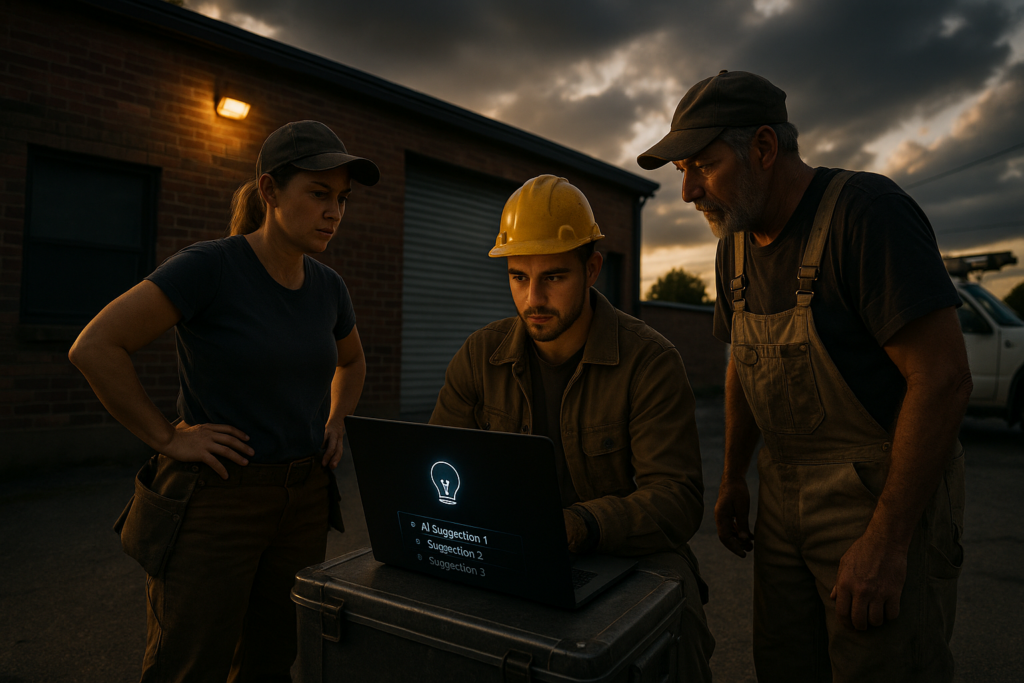
Benefits of AI suggestions for small teams
The integration of AI suggestions into the workflows of small trades teams offers a multitude of benefits that can significantly enhance their overall performance and project outcomes. One of the most immediate advantages is the time-saving aspect provided by AI-driven insights. With an AI trades planning app in the UK, teams can minimize the time spent on planning and administrative tasks, allowing them to redirect their focus toward hands-on work. This increased efficiency ultimately translates to more jobs completed in less time, fostering a competitive edge in a crowded market.
Additionally, AI can facilitate more accurate job forecasting and resource allocation. By analyzing historical data and current job requirements, AI systems can predict the necessary manpower, materials, and equipment needed for upcoming projects. This not only helps in maintaining optimal productivity levels but also reduces waste and lowers costs associated with over-ordering or under-preparing for tasks. Teams can operate with greater confidence, knowing they have the right resources available when they need them.
The ability to quickly analyze multiple variables and provide tailored recommendations also contributes to improved decision-making within small trades teams. For instance, AI applications can highlight the best-practice methods for various job types and suggest the most efficient sequences in which tasks should be completed. These intelligent recommendations help prevent bottlenecks and optimize workflow, ensuring that projects stay on track and adhere to timelines.
<pFurthermore, the implementation of AI tools promotes a culture of collaboration. As AI suggestions are generated and shared among team members, open communication is encouraged, allowing everyone to contribute their unique insights and skills. This collaboration can result in innovative solutions to complex problems, ultimately enhancing the quality of work produced. Team members are more likely to feel valued and engaged when they can see how their input directly influences project outcomes. <pLastly, integrating AI suggestions can enhance client satisfaction. With improved planning processes, timely completion of work, and higher quality outputs, small trades teams can exceed client expectations. The ability to provide accurate estimates and reliable project updates fosters trust and strengthens client relationships, which is vital for securing repeat business and positive referrals in a competitive market environment. Overall, the benefits of incorporating AI suggestions into job planning for small trades teams are substantial, paving the way for increased productivity, profitability, and long-term success.
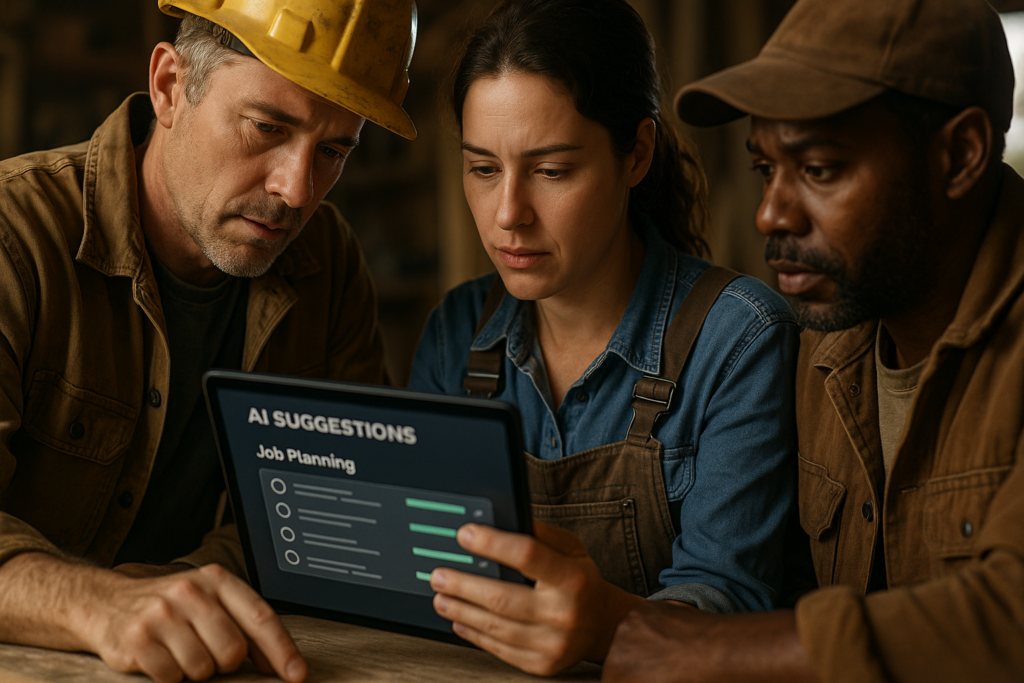
Implementing AI tools in the field
Implementing AI tools in the field requires a structured approach to ensure that small trades teams can seamlessly integrate technology into their existing workflows. Initially, the adoption of an AI trades planning app in the UK should focus on training team members. This involves not just technical training on how to use the app effectively, but also demonstrating the benefits that come with its usage. Team leaders can organize workshops where employees can engage in hands-on practice using the app, fostering a deeper understanding of its features and capabilities. Recognizing the app’s potential to simplify complex tasks can motivate team members to embrace this change, leading to a more unified effort in leveraging technology for job planning.
Once the team is adequately trained, the next step is to gradually introduce the app into live project scenarios. Starting with smaller projects allows the team to gather feedback and troubleshoot any issues in a controlled environment. During this phase, it is crucial for teams to maintain an open dialogue, discussing any challenges they encounter when using the AI tools. By collecting insights from team members regarding functionality and usability, organizations can make necessary adjustments or seek additional training to enhance the overall experience. This collaborative effort can greatly smooth the transition from traditional methods to an AI-enabled approach.
Furthermore, regular updates to the AI trades planning app can enhance its functionality based on user experience. Teams participating in a feedback loop with the app developers help ensure that the features are aligned with their practical needs, enabling the technology to evolve alongside their workflows. Such feedback can lead to improvements that address specific job planning challenges faced by small trades teams, making the app even more valuable over time.
Another important aspect of implementing AI tools is setting clear expectations and measurable goals. Teams should identify key performance indicators (KPIs) to track the app’s impact on project delivery, efficiency, and overall satisfaction. These metrics can serve as a benchmark for assessing the effectiveness of AI integration. For example, measuring the reduction in project planning time or improved resource utilization can help teams see tangible benefits, reinforcing their commitment to using the technology.
Ensuring ongoing support for team members as they adjust to using AI tools is essential. This support can take the form of continued training sessions, readily available troubleshooting resources, and a culture that encourages innovation. By doing so, teams will not only enhance their proficiency with the tools but also inspire a forward-thinking mindset that embraces continual improvement in job planning practices. Through a thoughtful implementation process, small trades teams can harness the full potential of AI technology, ultimately enhancing their operational efficiency and service delivery.
Case studies: Success stories in small trades
Several small trades teams have successfully integrated AI tools into their workflows, highlighting the transformative potential of these applications in real-world scenarios. One notable case involved a plumbing company based in London that struggled with job scheduling due to fluctuating demand and a limited workforce. By adopting an AI trades planning app in the UK, the company could analyze their past project data, leading to optimized scheduling that not only balanced workloads but also improved response times for customer requests. As a result, they saw a 30% increase in job completions per month, which significantly boosted their revenue.
Another example comes from an electrical contracting team in Manchester that needed to enhance its communication and resource tracking capabilities. Before implementing AI, they often faced difficulties in keeping all team members updated when managing multiple job sites. The introduction of an AI-driven project management tool allowed real-time updates and centralized communication, ensuring that all team members had access to vital project information. This shift led to a 25% decrease in reported miscommunication errors, showing a direct correlation between the AI tool and improved job site coordination.
<pA landscaping company in Birmingham also experienced significant improvements after integrating AI suggestions into their project planning process. Prior to implementation, the team often dealt with inefficiencies related to material ordering and task timelines, leading to wasted resources and incomplete projects. With the AI trades planning app, the team was able to predict material needs based on project specifics and historical usage data. This predictive capability led to a reduction in material wastage of over 40%, aligning inventory levels with actual project requirements and ensuring that jobs were completed on time.
Finally, a construction maintenance team in Bristol utilized an AI tool to enhance their service offerings. By leveraging the power of AI for job forecasting and resource allocation, they could proactively identify maintenance needs for their clients, rather than simply responding to calls. This proactive approach not only improved their customer satisfaction ratings but also established long-term relationships with clients who appreciated the preventive strategies. As a result, the company reported an increase in client retention rates, contributing to a more sustainable business model.
These success stories underline the profound impact that AI suggestions can have on small trades teams. By embracing technology tailored to their unique needs, these teams are not only overcoming traditional challenges but also enhancing their operational efficiency, ultimately leading to improved service delivery and client satisfaction.


