








Why View-Only Customer Portal Protects Sensitive Pricing
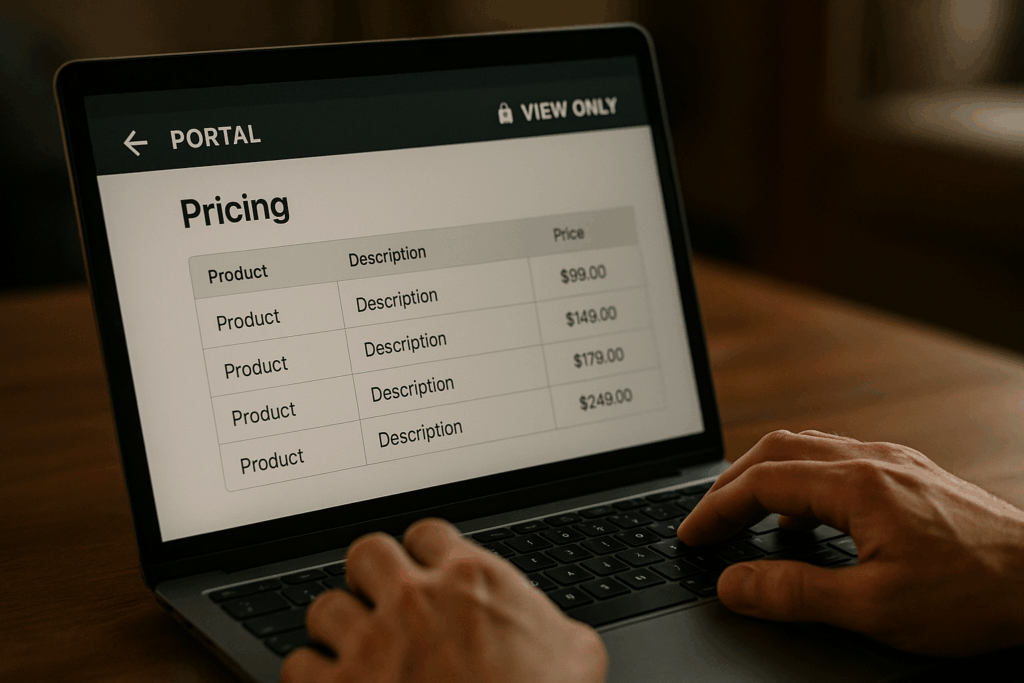
A view-only customer portal is a specialized digital space designed to restrict access for users, allowing them to see information without the ability to make changes or alterations. This feature is crucial for businesses that handle sensitive pricing data, as it ensures that customers can access necessary information while safeguarding proprietary data from unauthorized modifications. By limiting user capabilities to viewing, organizations can effectively manage content visibility and maintain pricing integrity. Such portals are often equipped with user-friendly interfaces, enabling customers to navigate and find relevant information easily while ensuring that sensitive areas remain protected. The implementation of a view-only customer portal can lead to a more controlled and secure environment where companies can interact with their customers transparently while minimizing risks associated with data manipulation.
New in this topic: How Bulk Customer Import Accelerates System Migration.
Benefits of Enhanced Security
Enhanced security is a primary advantage of implementing a view-only customer portal. By restricting user access to read-only formats, businesses significantly decrease the risk of unauthorized alterations to sensitive information. This limitation not only protects proprietary pricing data but also reinforces customer trust, as clients can feel assured that their interactions are secure and the data they view remains unchanged. Furthermore, with the implementation of additional security measures such as encryption and multi-factor authentication, the view-only customer portal can safeguard against external threats, including cyberattacks and data breaches. The ability to monitor access and track user activity also adds an extra layer of security, enabling businesses to identify any unusual patterns that could indicate potential vulnerabilities. This proactive approach to security not only protects the company’s interests but also emphasizes its commitment to safeguarding customer information. Ultimately, the establishment of a view-only framework cultivates a secure atmosphere where customers can confidently access necessary data without jeopardizing the integrity of sensitive information.

Mitigating Risks of Data Exposure
In today’s digital landscape, the risks associated with data exposure have become increasingly prevalent, making it essential for businesses to take proactive measures to protect sensitive information. The implementation of a view-only customer portal is a crucial step in this direction, as it inherently limits the potential for data leaks and unauthorized actions. By ensuring that customers can only view information without the ability to edit or share, organizations can effectively mitigate risks associated with data exposure. This is particularly important for sensitive pricing data, which, if leaked or manipulated, could have severe repercussions on market positioning and customer trust.
Furthermore, within a view-only environment, companies can establish strict user authentication protocols. By requiring robust login credentials and utilizing tools such as single sign-on and multi-factor authentication, organizations can ensure that only authorized individuals gain access to the portal. This layer of security acts as a barrier against unauthorized users who may attempt to exploit vulnerabilities in the system. Regular audits and monitoring of user activity also contribute to identifying any suspicious behavior, allowing businesses to respond promptly to any potential threats.
Apart from technological measures, it is also essential to cultivate a culture of security awareness among users. Providing training sessions and informative resources can empower customers to recognize potential threats and understand the importance of safeguarding their access credentials. Encouraging best practices for password management and awareness of phishing attempts can further reduce the risk of data exposure.
Moreover, businesses must regularly update their security protocols and the software supporting the view-only customer portal to address any newly identified vulnerabilities. This proactive maintenance not only fortifies the security measures in place but also enhances the overall user experience by ensuring the platform functions smoothly. By taking these steps, companies can significantly diminish the chances of data exposure while reinforcing their commitment to protecting sensitive information.
Implementing View-Only Features
Implementing view-only features within a customer portal requires careful planning and execution to ensure both functionality and security. First and foremost, businesses must conduct a thorough assessment of the types of information that will be displayed within the portal. This analysis helps in determining what data is necessary for customers to access, while also identifying sensitive areas that need to be strictly protected. Once the content has been categorized, it is crucial to design the user interface with clarity and ease of navigation in mind. Users should be able to find relevant information quickly without compromising the security of sensitive data. Utilizing intuitive layouts, search functions, and clearly labeled sections can enhance user experience, making it easier for customers to engage with the portal’s features.
From a technical standpoint, employing the right software solutions to facilitate view-only access is vital. Businesses should consider content management systems that support view-only functionality, allowing for easy content updates and ensuring that only the appropriate information is available to users. Access control is another critical component; implementing user roles and permissions can help delineate who can view specific content, further enhancing security. For instance, certain pricing data may only be available to specific customer segments based on their relationship with the company.
Furthermore, during the implementation phase, organizations should take into account the importance of responsive design. A view-only customer portal should be accessible across various devices, including smartphones, tablets, and desktops, to accommodate a diverse user base. This ensures that customers can access the information they need, regardless of their preferred method of interaction. Additionally, employing performance optimization techniques will guarantee that the portal operates smoothly, reducing loading times and enhancing overall user satisfaction.
Periodic testing and updates of the view-only features are essential for maintaining security and functionality. Businesses should establish a schedule for reviewing the portal’s performance, security protocols, and user feedback to identify areas in need of improvement. Continuous updates not only fix potential vulnerabilities but also keep the content relevant and engaging for users. By committing to a strategy of iterative enhancement, organizations can ensure that their view-only customer portal remains a trusted resource for their clients while safeguarding sensitive pricing and other proprietary information.
Best Practices for Customer Engagement
Engaging customers effectively within a view-only customer portal is essential for fostering loyalty and ensuring a positive user experience. One of the best practices in customer engagement is the provision of tailored content that addresses specific customer needs and preferences. By leveraging analytics and user behavior data, businesses can customize the information displayed in the portal, ensuring that it resonates with individual customers. This approach not only enhances the user experience by providing relevant information but also reinforces the customer’s relationship with the brand. Personalized notifications about pricing updates, product launches, or relevant resources can encourage users to return to the portal and engage with the content actively.
Additionally, incorporating interactive features, such as FAQs or support chat options, can significantly elevate the level of engagement within the view-only customer portal. While users cannot change information, offering readily accessible assistance helps users navigate the portal more effectively and get answers to their queries promptly. Implementing a robust knowledge base or help center can empower customers to find solutions independently, contributing to a more satisfying user experience. These features, while maintaining the core principle of a view-only environment, allow businesses to support customer inquiries without compromising sensitive data.
Another impactful strategy is to gather feedback directly from users regarding their experiences with the portal. Creating avenues for customers to share their thoughts can help organizations identify areas of improvement and innovation. Surveys, feedback forms, or periodic check-ins can provide valuable insights into user preferences and pain points, enabling continuous enhancement of the portal. This demonstrates to customers that their opinions matter, further enriching their relationship with the brand.
Moreover, keeping users informed about updates or changes in the view-only customer portal can also strengthen engagement. Regular communications through email newsletters or notifications within the portal can alert users to new features or enhancements, encouraging them to explore and utilize the platform fully. This strategy not only keeps the customer informed but also showcases the company’s commitment to improving their services and user experience.
Creating a sense of community can be a powerful engagement tool. Businesses can facilitate interactions among customers through discussion boards or community forums where users can share experiences and insights related to the information accessed through the view-only customer portal. This cultivates a sense of belonging and support, as customers see that they are part of a broader network of users who share similar interests and concerns.


